

Affordability has become the defining issue of the 2026 election cycle, and state governments have churned out bills and executive actions aimed at easing the cost of living. Two philosophies have emerged across the proposals. One asks the government to push out-of-pocket prices down; the other asks the government to roll back its own cost-raising policies. Only one can deliver durable results.
The year opened with a wave of State of the State addresses emphasizing affordability concerns. Most proposals layered new government interventions over existing ones. At least nine governors pledged new or expanded childcare programs, from tax credits backed by Rhode Island’s Democratic governor and New Hampshire’s Republican one, to direct subsidies in Virginia and workforce funding in California and Pennsylvania. Energy rebates were also common: Arizona and Kentucky proposed funds to help residents cover utility bills, and Connecticut and Washington promised one-time household credits of $400 and $200, respectively. Illinois’s governor asked for $2 billion for the state’s medical debt forgiveness program.
Other governors went beyond subsidies into price controls. New Jersey’s Mikie Sherrill declared a state of emergency on utility costs and imposed a rate freeze. Pennsylvania extended a price collar on the state’s electricity market, Rhode Island capped health insurance costs, and Massachusetts’s governor demanded utility providers justify every fee on household bills. Indiana’s governor supported a bill requiring utilities to demonstrate affordability before raising profit margins. Lawmakers introduced more than 40 bills across 24 state legislatures in 2026 to ban algorithmic pricing, already outpacing all of 2025. New York’s attorney general would ban the practice across virtually all industries and prohibit electronic price tags in grocery stores. Illinois recently moved to ban junk fees.
These proposals repeat mistakes common at the federal level. Price controls, subsidies, and mandates all aim to ameliorate the reality of high market prices, rather than taking affirmative steps to bring them down sustainably. Rebate checks and rate freezes for utilities don’t make energy more widely available; they merely obscure the mismatch between the quantities supplied and demanded. Worse, they inflict real economic harm. Government-paid rebates diffuse their costs among taxpayers while sending more dollars chasing the same constrained power supply. A rate freeze disincentivizes the new generation, compounding the supply problem.
Genuine supply-side reforms work because they change underlying conditions rather than mask them. Zoning reform and relaxing urban growth boundaries expand the effective supply of land available to housing developers, lowering rents in the long run. Allowing private power plants to sell excess power onto the state grid makes electricity more available to consumers throughout the state. Trimming regulatory burdens, more generally, lowers the cost of doing business and so encourages more production.
In that sense, improving affordability through policy change, at least in aggregate, is necessarily a supply-side project. It means building more homes, producing more energy, and stripping away the regulatory burdens that drive costs up. Some governors are embracing this way of thinking, but their camp is much smaller.
Nebraska’s governor wants to allow large power users to build their own power generators and sell surplus onto the state grid, and Utah’s governor promised to “pull every lever” to expand housing supply.
During the 2026 legislative sessions, zoning reform to expand the supply of housing showed strong momentum, with reform bills passing in at least eight states. Indiana made duplexes and accessory dwelling units legal by right throughout the state, capped parking requirements, and limited impact fees. Washington enacted permitting reform, and Idaho moved to allow manufactured homes in any residential zone. But there’s clearly a lot more that can be done around permitting, urban growth boundaries, and building codes.
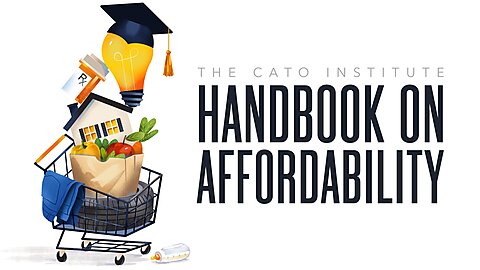
In our new Handbook on Affordability, we detail 37 state policies that could help lower living costs across markets as diverse as health care and consumer financial services. Eliminating clinician licensing and freeing clinicians to practice to the full extent of their training would grow the supply of medical professionals, driving down prices. Authorizing privately financed, contract-based electricity systems would end incumbent utilities’ government-granted monopoly and open energy markets to greater price competition. Ending childcare credential mandates and making home-based childcare legal by right would grow the range of childcare options, including more affordable alternatives.
The proposals there have one thing in common: They lower costs by removing government-created barriers rather than layering new mandates on top of them. That is the approach that can really move the needle on prices.
The authors would like to thank Adriana Soto for her research assistance.
